http://www.sciencedaily.com/releases/2014/01/140124082608.htm
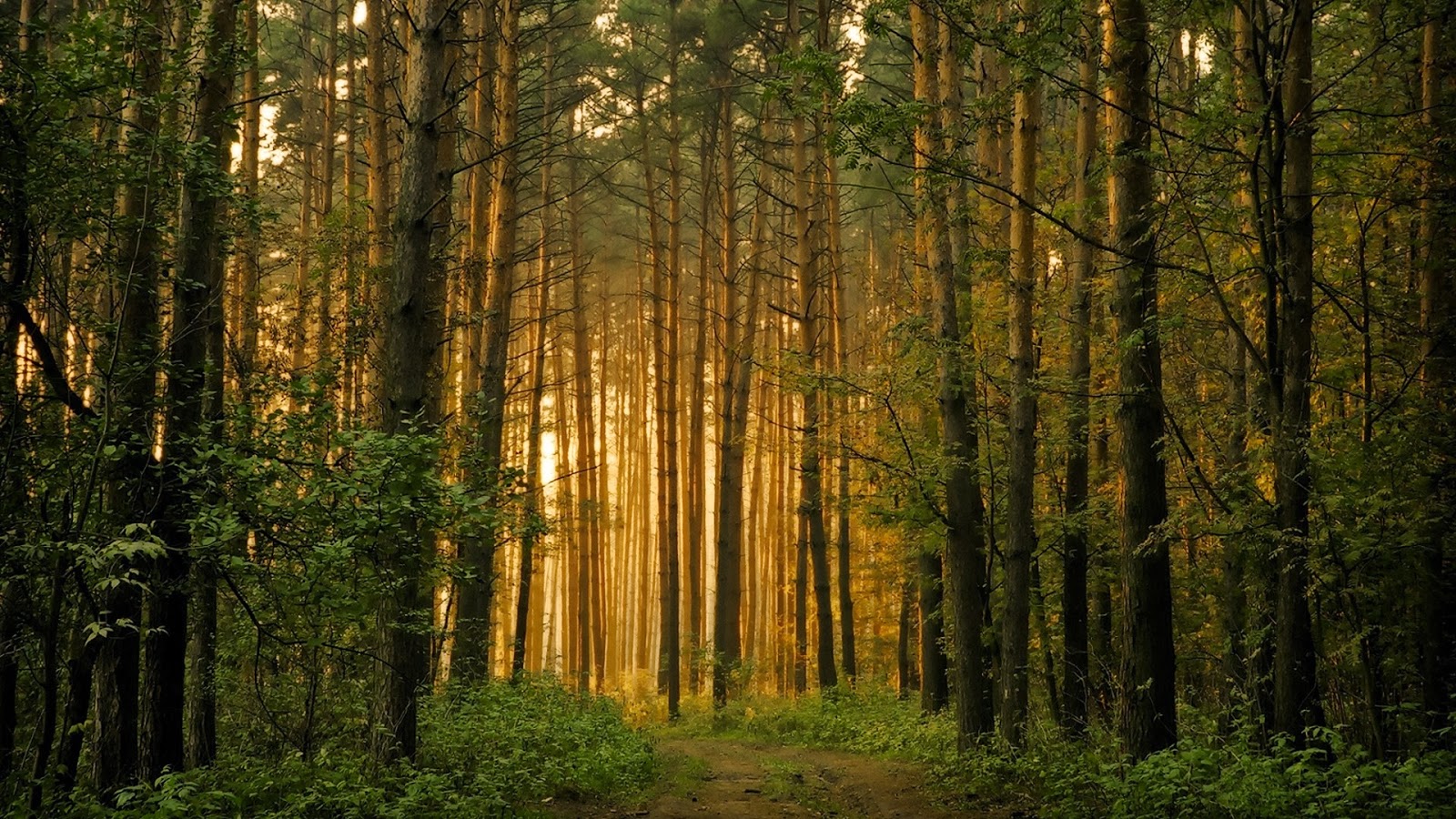
Although it has been inferred in the past that "the rain forests of Borneo, Sumatra, Java, Thailand and Vietnam" were "largely unaffected by humans", there has been recent evidence suggesting otherwise. Dr. Chris Hunt is Director of Research on Environmental Change at Queen's School of Geography, Archaeology and Palaeoecology and his findings support the thought that humans in fact have played a huge role in effecting these forests for the last 11,000 years through "repeated disturbance of vegetation since the end of the last ice age". His research is going to be published in the Journal of Archaeological Science and explains his findings of pollen samples that unlock "historical secrets", that we have actually been disturbing these vegetations for years. He notes that there is no correlation to climate change as an excuse for the destruction of these forests, but rather the indigenous people are to blame. It is ambiguous, however, how harmful or helpful human interaction is to forests, as there is evident that the same people who cut down a forest "planted sources of food in its place". It seems to me there will always be a blurred line between helpful and harmful when it comes to humans' interactions with nature.
Sunday, January 26, 2014
Mars could have supported life: Ten years on Mars leads to livable mud
http://www.sciencedaily.com/releases/2014/01/140124093710.htm
Scientists from Cornell University have been analyzing old minerals found on Mars and recently found evidence that "around four billion years ago Mars had liquid water so fresh it could have supported life". Professor Steven Squyres led the research and confirmed the likeliness that Mars may "have been habitable". Although the temperature on Mars now is so low that there is no way life could form there, the rock analysis proves that there may have in fact been life there once upon a time, although the mud was "as acidic as vinegar". A major source of the gathered information on Mar was taken by "Opportunity Rover, a golf buggy-sized terrain vehicle" whose 10th anniversary was just celebrated this year. Thanks to Oppy we now have a "richer knowledge" of Mars and know "where to focus our future search", with plenty more to learn!
Friday, December 27, 2013
Catching Rays in California, and Storing Them
http://www.nytimes.com/2013/12/24/business/energy-environment/catching-some-rays-in-california-and-storing-them.html?ref=earth
According to Wald's article, "solar power is growing so fast in California...that it is turning the stat's power system upside down". This new system uses a technique we have known about for some time now, but it uses it in a more creative way, working in the opposite direction. The original idea was to "use batteries to store power at night form traditional sources...and run them down in the peak heat of late afternoon". But, in California, the sunset is when there is the most sun available, so the panels "keep operating in the late afternoon, when the output from solar panels eliminates the need for their electricity".
The only issue with this new method is that they sometimes find they have too much power than they have use for, called an "oversupply". As far as I can tell, it's better to have too much than not enough and it's impressive that California has such a handle on this innovative solar panelling technique, using their own resources to their best ability.
According to Wald's article, "solar power is growing so fast in California...that it is turning the stat's power system upside down". This new system uses a technique we have known about for some time now, but it uses it in a more creative way, working in the opposite direction. The original idea was to "use batteries to store power at night form traditional sources...and run them down in the peak heat of late afternoon". But, in California, the sunset is when there is the most sun available, so the panels "keep operating in the late afternoon, when the output from solar panels eliminates the need for their electricity".
The only issue with this new method is that they sometimes find they have too much power than they have use for, called an "oversupply". As far as I can tell, it's better to have too much than not enough and it's impressive that California has such a handle on this innovative solar panelling technique, using their own resources to their best ability.
In the Shadow of Rising Towers, Laments of Lost Sunlight in New York
http://www.nytimes.com/2013/12/20/nyregion/in-the-shadow-of-rising-towers-laments-of-lost-sunlight-in-new-york.html?adxnnl=1&ref=earth&adxnnlx=1388154841-OtUc2ysTTkDYVda/f+WF7w
As much as I love going in for the day or the night, I've always know that I don't want to live in New York City, and this article confirmed it for me. With skyscraper after skyscraper being built, "the quest to reach higher often comes at the cost of stealing someone else's light". Whether blocking off someone's window with brick or blocking off its view of the sun by height of a new building. many new yorkers constantly find themselves stuck in the "dark". This article interviewed some new yorkers about their own loss of light and the way this constant construction makes them feel. George Sanders had a building built right next to his apartment, but was disappointed with how it was carried out. He thinks that "going higher and staying narrow would've allowed light and air...Now we're just plunged into darkness. It's just too bad".
Some call it "a sense of being sealed off, of being isolated" and that their apartments now are very "cavelike". Who wants to come home to that? I guess they could just escape to places like Central Park to get a breath of fresh air and some sunlight. But, not for long; "Seven towers are planned or underway along the area south of Central Park", taking away sunlight there too. While I understand the importance of constant expansion in a city like New York, it seems clear to me that more efforts have to be made in order to maintain sunlight for all of its essential benefits to the people living there.
As much as I love going in for the day or the night, I've always know that I don't want to live in New York City, and this article confirmed it for me. With skyscraper after skyscraper being built, "the quest to reach higher often comes at the cost of stealing someone else's light". Whether blocking off someone's window with brick or blocking off its view of the sun by height of a new building. many new yorkers constantly find themselves stuck in the "dark". This article interviewed some new yorkers about their own loss of light and the way this constant construction makes them feel. George Sanders had a building built right next to his apartment, but was disappointed with how it was carried out. He thinks that "going higher and staying narrow would've allowed light and air...Now we're just plunged into darkness. It's just too bad".
Some call it "a sense of being sealed off, of being isolated" and that their apartments now are very "cavelike". Who wants to come home to that? I guess they could just escape to places like Central Park to get a breath of fresh air and some sunlight. But, not for long; "Seven towers are planned or underway along the area south of Central Park", taking away sunlight there too. While I understand the importance of constant expansion in a city like New York, it seems clear to me that more efforts have to be made in order to maintain sunlight for all of its essential benefits to the people living there.
Chile: Indian Leader Found in Reservoir
http://www.nytimes.com/2013/12/26/world/americas/chile-indian-leader-found-in-reservoir.html?ref=earth&_r=1&
Definitely a bit more morbid than I usually choose for my articles, this one I found really interesting. This past Tuesday, Nicolesa Quintreman was "found floating in a reservoir she spent a decade trying to prevent from being created". In her life, she was a leader of the Mapuche Indians in Chile and "became a national figure in Chile during protests against the construction of a hydroelectric dam on tribal land". She literally died fighting for what she believes in. This tribe clearly didn't have a say when outsiders came in to construct the reservior. Being their own native land and after we have literally taken everything else away from them, I think this was very much overstepping our boundaries. It's a shame that Quintreman died in her protest, but hopefully now people can learn from it and prevent it from happening again. The native people have every right to have a say in how outsiders manipulate their land.
A Struggle to Balance Wind Energy With Wildlife
http://www.nytimes.com/2013/12/17/science/earth/a-struggle-to-balance-wind-energy-with-wildlife.html?ref=earth
The topic of this article immediately intrigued me because it's something that I haven't really thought about: the fact that it could be a problem if too many people are trying to do good. Wind energy is obviously a major help when looking toward our future climate, but it is definitely crucial to keep preserving wildlife. In this article, Dan Frosch calls "the wind energy industry and environmental organizations" "two staunch allies" and I completely agree. Environmental organizations claim the new federal rule, that wind farms can "lawfully kill bald and golden eagles under 30-year permits", as not looking far enough into the long-term. David Yarnold from the National Audubon Society claims "it basically says you can go operate these wind turbines and kill as many eagles as happen to die".
However, the federal figures assure the agreement serves to "balance the practical considerations of long-term wind farm projects with the need to keep eagle populations stable". And, it could be possible that the conservationists are overreacting a little bit, being that neither bald nor golden eagles are considered endangered anymore, as of 2007. Moreover, "fewer than six bald eagles have ever been killed by a wind turbine". In science and in life there are sometimes no right answers. Coming up with agreements and compromises is always complicated, especially when involving our future and the future of our changing climate.
The topic of this article immediately intrigued me because it's something that I haven't really thought about: the fact that it could be a problem if too many people are trying to do good. Wind energy is obviously a major help when looking toward our future climate, but it is definitely crucial to keep preserving wildlife. In this article, Dan Frosch calls "the wind energy industry and environmental organizations" "two staunch allies" and I completely agree. Environmental organizations claim the new federal rule, that wind farms can "lawfully kill bald and golden eagles under 30-year permits", as not looking far enough into the long-term. David Yarnold from the National Audubon Society claims "it basically says you can go operate these wind turbines and kill as many eagles as happen to die".
However, the federal figures assure the agreement serves to "balance the practical considerations of long-term wind farm projects with the need to keep eagle populations stable". And, it could be possible that the conservationists are overreacting a little bit, being that neither bald nor golden eagles are considered endangered anymore, as of 2007. Moreover, "fewer than six bald eagles have ever been killed by a wind turbine". In science and in life there are sometimes no right answers. Coming up with agreements and compromises is always complicated, especially when involving our future and the future of our changing climate.
Saturday, November 23, 2013
Biodiversity Higher in the Tropics, but Species More Likely to Arise at Higher Latitudes
http://www.sciencedaily.com/releases/2013/11/13112213245.htm
Researchers at the National Evolutionary Synthesis Center in NC came to the same conclusion that a few studies before have as well. While we all know that areas near the equator host the most biodiversity, there seems to be some data suggesting we may be giving it too much credit. It's easy to picture the tropical rain forests, rich with a multitude of species. But this data, studying 2300 species of mammals and 6700 species of birds, suggests that there is a greater number of "subspecies" in the harsher environments of higher latitudes than the equator. A subspecies is a potential stepping stone in the process by which one species becomes two, and there are many reasons as to why it is possibly true that more exist in harsher conditions, as discussed in a study published in an issue of Molecular Ecology, which is also consistent with a study by the University of British Columbia.
Botero, a lead author of the NC study, makes the metaphor "comparing biodiversity in the temperate zones with that in the tropics" to "the coins in your pocket with the coins in your piggy bank...there are usually more coins in your piggy bank than in your pocket, but you're always spending the coins in your pocket, and receiving new coins in the from of change...the coins in your piggy bank turn over less often, but over time they add up". For me, that cleared up the situation and I thought it was a clever way of explaining it. This just goes to show that both the environment and scientific data are constantly changing, and there is most definitely something new to look into every day!
Researchers at the National Evolutionary Synthesis Center in NC came to the same conclusion that a few studies before have as well. While we all know that areas near the equator host the most biodiversity, there seems to be some data suggesting we may be giving it too much credit. It's easy to picture the tropical rain forests, rich with a multitude of species. But this data, studying 2300 species of mammals and 6700 species of birds, suggests that there is a greater number of "subspecies" in the harsher environments of higher latitudes than the equator. A subspecies is a potential stepping stone in the process by which one species becomes two, and there are many reasons as to why it is possibly true that more exist in harsher conditions, as discussed in a study published in an issue of Molecular Ecology, which is also consistent with a study by the University of British Columbia.
Botero, a lead author of the NC study, makes the metaphor "comparing biodiversity in the temperate zones with that in the tropics" to "the coins in your pocket with the coins in your piggy bank...there are usually more coins in your piggy bank than in your pocket, but you're always spending the coins in your pocket, and receiving new coins in the from of change...the coins in your piggy bank turn over less often, but over time they add up". For me, that cleared up the situation and I thought it was a clever way of explaining it. This just goes to show that both the environment and scientific data are constantly changing, and there is most definitely something new to look into every day!
Subscribe to:
Posts (Atom)


